
Foreign portfolio investors have started 2026 on a cautious note, extending their selling streak from last year by withdrawing Rs 7,608 crore ($846 million) from Indian equities in the first two trading sessions of January. The withdrawal of funds followed the largest outflow of Rs 1.66 lakh crore ($18.9 billion) recorded in 2025, triggered by volatile currency movements, global trade tensions and concerns over potential US tariffs, and stretched market valuations.

Foreign investors have pulled out Rs 11,820 crore ($1.3 billion) from Indian equities in the first week of this month, primarily driven by the sharp depreciation of the rupee. This sharp withdrawal follows a net outflow of Rs 3,765 crore in November, further pressuring markets.

WPI inflation data, trading activity of foreign investors and global cues would dictate trends in the stock market this week, analysts said.

Sanjay Malhotra has made structural changes to banking regulation to bring down costs and increase efficiency. Plus, he kicked off a benign interest regime. But there are challenges ahead.

The projections in the cement industry are mixed. Prices and demand remained muted in the third quarter (October & November) and short term uptick doesn't seem likely. However, the second quarter of the financial year 2026 (Q2FY26) was good year-on-year (Y-o-Y) for many cement majors aided by base effect, and some analysts expect acceleration in earnings and volume in the next financial year, again aided by base effect.

The country's largest airline IndiGo on Tuesday reported a loss of Rs 2,582.10 crore in the September quarter as higher forex losses and expenses impacted the bottom line, and it expects to induct the first long range Airbus A321 XLR aircraft in December. The airline, which had a loss of Rs 986.7 crore in the year-ago period, said hedging actions and more revenues in foreign currencies from international operations will help cushion the currency movements.

Global risks include a potential delay in the US-India trade agreement, the possibility of a sharp correction in US equity markets, and renewed geopolitical tensions.

Foreign investors pulled out Rs 17,955 crore (Rs 2 billion) from Indian equities in the first two weeks of this month, taking the total outflow to Rs 1.6 lakh crore (Rs 18.4 billion) in 2025.' This sharp withdrawal follows a net outflow of Rs 3,765 crore in November, extending the pressure on domestic equity markets.

The 2025 contraction marks the steepest decline in both the number of billionaire promoters and their aggregate wealth since 2012.

The Reserve Bank of India (RBI) on Friday delivered a 25 basis point (bps) repo rate cut analysts expected, driven by the strong 8.2 per cent GDP growth in the September quarter. However, analysts do not expect a runaway market rally as the impact of US tariffs continues.

The share of first-time luxury customers in BMW's portfolio has risen sharply -- from around 43 per cent in 2024 to nearly 49 per cent in 2025. In some models, the figure is even higher.

India's mergers and acquisitions (M&A) activity cooled in the second quarter of 2025-26 (Q2FY26), with deal value falling to $26.26 billion from $29.04 billion a year ago, according to Bloomberg data.

Is the parabolic rise in silver running out of steam or just getting started? Ramalingam Kalirajan offers his take on if you should invest in silver now?

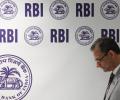
Reserve Bank of India (RBI) Governor Sanjay Malhotra, and Deputy Governors Poonam Gupta, T Rabi Sankar, Swaminathan J, and S C Murmu on Friday addressed issues during the post-policy media interaction.

In the shadows of a sliding rupee, India's knitwear hub Tiruppur is weaving a success story. While the domestic currency edges closer to the 86 mark against the US dollar, triggering concerns for many sectors, this textile town in Tamil Nadu is finding opportunity in adversity: Between April and December alone, Tiruppur's exports reached Rs 26,000 crore, almost eclipsing last financial year's total of Rs 30,690 crore.

After a record-breaking year, India's automobile industry is entering 2026 on a relatively strong footing, with sales growth expected in the 6-8 per cent range. The outlook is underpinned by policy support, including GST rationalisation, easing monetary conditions, and income tax relief, which together are likely to improve affordability and sustain consumer demand across vehicle segments.

India, the world's fourth largest economy, is set to maintain the 'goldilocks' phase with tailwinds of good growth, low inflation and robust banking performance as well as reform initiatives poised to sustain the economic pace witnessed during 2025.

Despite a 2.8 per cent fall in 2025 volumes, Mercedes-Benz India reported its best-ever revenue and profitability, led by top-end models, AMG growth and higher BEV mix.

Reserve Bank Governor Sanjay Malhotra on Saturday said that the market forces decide the value of rupee with respect to the US dollar and the central bank is not worried about day-to-day movement of the currency value.

The Reserve Bank of India's (RBI's) short dollar forward positions rose by $6 billion in September - the first increase in seven months - indicating the central bank's readiness to defend the rupee in the forward market amid pressure on the currency, latest data showed. The net short dollar position stood at $59.4 billion at the end of September, up from $53.4 billion in August.
The core dilemma remains: Why provide further stimulus to an economy that is already booming at an 8 per cent growth rate? asks Rajeswari Sengupta.

The weaker rupee will push the country's import bill due to higher payments for crude oil, coal, vegetable oil, gold, diamonds, electronics, machinery, plastics, and chemicals, economic think tank GTRI said on Friday. Citing an example, it said the depreciating domestic currency will increase India's gold import bill, especially as global gold prices have jumped 31.25 per cent, rising from $65,877 per kg in January 2024 to $86,464 per kg in January 2025.

Among Sensex firms, Bajaj Finance, Sun Pharma, Trent, Mahindra & Mahindra, State Bank of India and Bajaj Finserv were the major laggards. However, Tata Motors Passenger Vehicles, Maruti, Bharat Electronics, Kotak Mahindra Bank, Adani Ports and HCL Tech were among the gainers.

Reserve Bank Governor Sanjay Malhotra on Friday said the exchange rate policy has remained consistent over the years and the central bank does not target any 'specific level or band' of the rupee, which slipped to an all-time low of 87.59 to a US dollar. On Thursday, the rupee plunged 16 paise to close at a record low of 87.59 against the American currency. "I would like to mention here that the Reserve Bank's exchange rate policy has remained consistent over the years.

Gold and silver prices are poised to maintain their record-setting rally in the coming week as investors focus on global inflation data and key macroeconomic indicators that shape central bank policy paths, analysts said.

Jayesh Gandhi, executive director, Morgan Stanley Investment Management in an interview with Business Standard, says Indian equities continue to remain a long-term bull story based on the growth prospect for the country and, hence, in a way cannot be ignored by global investors.

Who are the gainers from all these economic policies of SEZs, weakening Rupee, tax breaks, etc? Obviously, it is fictitious exporters and shady foreign investors.

Billionaire Mukesh Ambani's Reliance Industries has retained its position as the highest-ranked Indian company on the 2025 Fortune Global 500 list, according to the latest rankings released by the publication. The oil-to-telecom-and-retail conglomerate has been ranked at No.88 on the latest list, down from 86th position in 2024.

Among the Sensex constituents, Asian Paints, Tech Mahindra, HCL Technologies, Tata Steel, Maruti Suzuki India, Sun Pharmaceuticals, Tata Consultancy Services, ICICI Bank, Bajaj Finance, UltraTech Cement, Mahindra & Mahindra and Tata Motors Passenger Vehicles were the laggards. However, Eternal, Titan, Adani Ports, Bharat Electronics Ltd, State Bank of India, Bajaj Finserv, NTPC and Bharti Airtel were among the gainers.

'The primary market's rhythm mirrors investor confidence. While sentiment may appear cautious, it reflects maturity, not weakness.'
The impact of currency depreciation can also be mitigated by holding a portion of your investment portfolio in dollar-denominated assets.

The Reserve Bank of India (RBI) abstained from selling any US dollars throughout February, for the first time in nine months. The decision comes amid increasing pressure on the rupee, as expectations of rate cuts by the US Federal Reserve keep pushing back. The last time the RBI did not sell dollar over a month was in May 2023.

India's luxury auto market is rebounding after a slow start to 2025, with GST 2.0 emerging as the main catalyst.

A potential risk to the rupee's appreciation trajectory lies in the event of a delay in the Federal Reserve's rate cut cycle, particularly if core inflation in the US remains elevated.

Officials from both India and the US in the recent past have indicated that a "fair deal" will be concluded soon, with Indian officials holding that more formal rounds of talks are not needed.

Gold prices skyrocketed by Rs 9,700 to scale a fresh peak of Rs 130,300 per 10 grams in the national capital on Monday, lifted by safe-haven buying in the overseas markets and depreciation in the rupee.

Here's what Indian investors diversifying into equities, ETFs, and real estate abroad to manage risk, returns, and currency exposure must watch out for.

The depreciation in rupee may pose a problem for students who have taken loans from Indian lenders.

From Rs 73k to over Rs 1.2L between January-December 2025 -- is buying gold in 2026 still sensible?

S&P Global Ratings on Thursday said about half of the Indian companies that it rates are getting a boost in their core profitability from rupee depreciation. "Much of our rated India corporate portfolio has sizable US-dollar linked revenue and, therefore, is not exposed to rupee depreciation. "This encompasses entities in the IT, metals, and chemicals sectors. About half of the firms we rate are getting an EBITDA boost from currency weakening," the US-based rating agency said in a report.
